

About Course
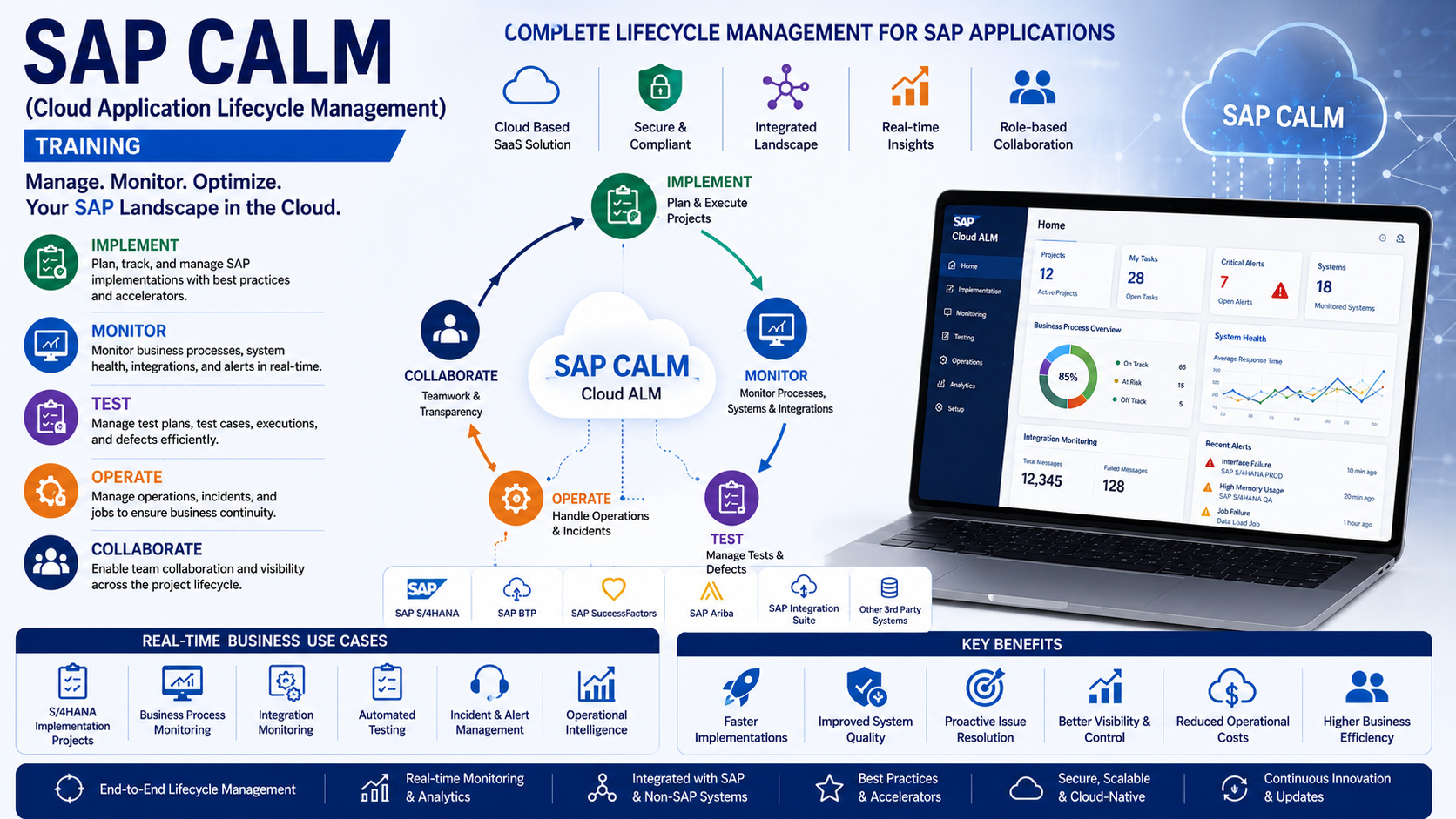
🚀 SAP CALM (Cloud Application Lifecycle Management) Training
Cloud-Based Application Lifecycle Management for SAP Landscapes
📘 What is SAP CALM?
SAP CALM (SAP Cloud ALM) is SAP’s cloud-based Application Lifecycle Management platform designed to help organizations manage:
- SAP implementations
- Project execution
- Monitoring
- Testing
- Operations
- Business process tracking
It helps enterprises manage the complete lifecycle of SAP systems from implementation to operations.
In simple words:
SAP CALM helps companies plan, implement, monitor, and manage SAP projects and systems in one cloud platform.
🎯 Course Overview
This course helps you learn:
- SAP CALM architecture
- Implementation management
- Project task tracking
- Business process monitoring
- Health monitoring
- Integration monitoring
- Testing & automation
- Operations management
- Real-time SAP project scenarios
Learn how enterprises monitor and manage SAP cloud environments efficiently.
⚙️ How SAP CALM Works
- Setup SAP Cloud ALM
- Connect SAP systems
- Configure implementation tasks
- Monitor business processes
- Track system health
- Handle alerts & issues
- Manage lifecycle operations
Example:
Monitor S/4HANA system performance and automatically track issues during implementation.
🏢 Real-Time Business Use Cases
Implementation Projects
- S/4HANA migration tracking
- SAP rollout management
Operations Monitoring
- System health monitoring
- Business process monitoring
Testing
- Automated test management
- Defect tracking
Cloud Operations
- Alert monitoring
- Integration monitoring
Project Management
- Task tracking
- Team collaboration
📚 DETAILED COURSE CONTENT
Module 1: Introduction to SAP CALM
- What is SAP Cloud ALM
- Evolution from SAP Solution Manager
- ALM concepts
- SAP Cloud strategy
- SAP CALM architecture
- Benefits of Cloud ALM
Module 2: SAP Cloud ALM Architecture
- CALM architecture overview
- SAP BTP integration
- Tenant setup
- Cloud connectivity
- Security overview
Module 3: SAP Cloud ALM Setup & Configuration
- Initial setup
- User management
- Role assignments
- Landscape onboarding
- Service activation
Module 4: Implementation Management
- Project setup
- Requirement management
- Task management
- Project templates
- Roadmaps & accelerators
- Fit-to-standard methodology
Module 5: Requirement-to-Deploy Process
- Requirement gathering
- Documentation
- Workflow management
- Deployment tracking
Module 6: Business Process Monitoring
- Business process observability
- Monitoring setup
- KPI tracking
- Process analytics
- Issue identification
Module 7: Health Monitoring
- System monitoring
- Availability monitoring
- Performance monitoring
- Alert handling
- Event tracking
Module 8: Integration & Exception Monitoring
- Interface monitoring
- API monitoring
- Integration health tracking
- Error handling
- Exception management
Module 9: Testing Management
- Test preparation
- Manual testing
- Automated testing
- Defect management
- Test execution tracking
Module 10: Operations Management
- Day-to-day operations
- Incident handling
- Monitoring dashboards
- Operational intelligence
Module 11: Job & Automation Monitoring
- Job scheduling
- Job monitoring
- Automation tracking
- Background process monitoring
Module 12: Business Service Management
- Service monitoring
- SLA tracking
- Service dependencies
- Business impact analysis
Module 13: Alert Management
- Alert creation
- Notifications
- Escalation handling
- Incident response
Module 14: SAP Landscape Integration
- S/4HANA integration
- SAP BTP integration
- SAP SuccessFactors monitoring
- SAP Ariba integration
- SAP Integration Suite connectivity
Module 15: Analytics & Reporting
- Dashboard creation
- KPI reports
- Operational reporting
- Management insights
Module 16: Security & Governance
- User access management
- Role-based authorization
- Audit tracking
- Compliance monitoring
Module 17: Real-Time Project Scenarios
- S/4HANA implementation project
- Business process monitoring
- SAP cloud operations monitoring
- Integration exception handling
- Enterprise monitoring scenarios
Module 18: Best Practices & Architecture
- ALM best practices
- Monitoring standards
- Governance framework
- Enterprise operations strategy
Module 19: Interview Preparation
- SAP CALM interview questions
- Scenario-based discussions
- Architecture explanations
- Real-time project discussions
🎓 Who Can Learn?
- SAP Basis Consultants
- SAP Technical Consultants
- SAP Project Managers
- SAP Support Consultants
- SAP BTP Consultants
- Monitoring Specialists
- IT Operations Teams
Basic SAP knowledge is helpful.
💼 Career Opportunities
- SAP Cloud ALM Consultant
- SAP Operations Consultant
- SAP Monitoring Specialist
- SAP Technical Architect
- SAP Cloud Operations Engineer
✅ Benefits of Learning SAP CALM
- High-demand SAP cloud skill
- Essential for S/4HANA implementations
- Strong monitoring expertise
- Cloud operations knowledge
- Excellent global career opportunities
⏳ Course Duration
Basic Training: 35–45 Hours
Advanced with Real-Time Projects:
50–65 Hours
🌟 Why Choose GTC Trainings?
- Real-time project exposure
- Expert SAP trainers
- Hands-on practical learning
- Interview preparation
- Placement assistance
- Flexible online training