

About Course
📘 What is SAP BPA?
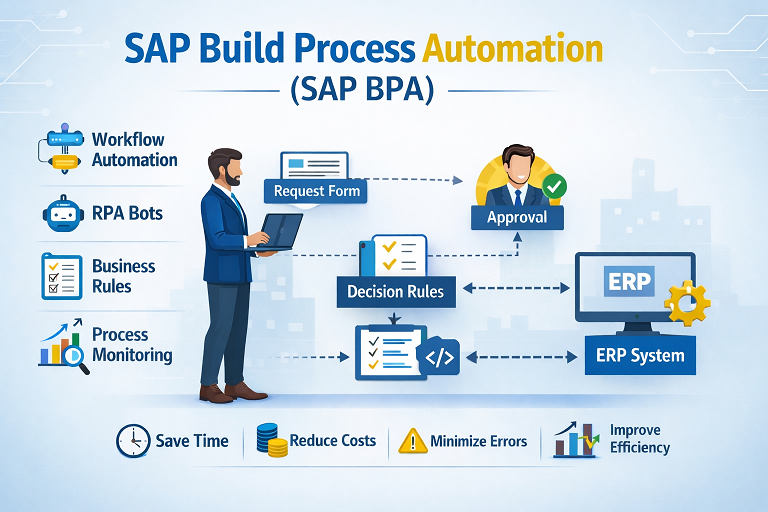
SAP BPA (SAP Build Process Automation) is a low-code automation tool from SAP that helps businesses automate their daily processes.
It combines:
- Workflow Automation
- Robotic Process Automation (RPA)
- Business Rules
- Process Monitoring
👉 In simple terms:
SAP BPA replaces manual work with automated digital workflows.
⚙️ How SAP BPA Works
A typical automation process works like this:
- User submits a request (form)
- System triggers workflow
- Business rules check conditions
- Approval goes to manager
- Final action happens (SAP update / email)
👉 Everything happens automatically without manual follow-up.
🏢 Where SAP BPA is Used (Real-Time)
💰 Finance
- Invoice approval automation
- Payment approvals
- Expense processing
- Vendor onboarding
👨💼 Human Resources (HR)
- Employee onboarding
- Leave approvals
- Offer letter workflows
- Document verification
🛒 Procurement
- Purchase request approvals
- Vendor registration
- Contract approvals
💻 IT Operations
- User access approvals
- Ticket routing
- System provisioning
🏭 SAP / Enterprise Systems
- SAP S/4HANA automation
- Data entry automation using bots
- System integrations
Benefits of SAP BPA
- ⏱ Saves time
- 💰 Reduces cost
- 📉 Minimizes errors
- 📊 Improves tracking
- ✅ Ensures compliance
Simple Example
Purchase Approval Process:
- Employee submits request
- System checks amount
- Manager approves
- Finance approves
- Order created in SAP
- Notification sent
👉 Fully automated process
Summary
- SAP BPA = Process Automation Tool
- Used in Finance, HR, IT, Procurement
- No coding required (Low-code platform)
- Helps companies become digital & efficient
🚀 SAP BPA Course Content
(SAP Build Process Automation Training Program)
📘 Course Overview
SAP BPA (SAP Build Process Automation) is a low-code automation platform on SAP BTP that enables organizations to automate workflows, integrate systems, and streamline business processes.
This course provides end-to-end hands-on training covering workflows, RPA, business rules, forms, integrations, and real-time projects.
🎯 Course Objectives
By the end of this course, you will be able to:
- Design automated workflows
- Build business rules and decision logic
- Create dynamic forms
- Develop RPA bots for SAP & web automation
- Integrate SAP systems using APIs
- Deploy and monitor automation processes
🧱 Course Modules (Detailed)
🔹 Module 1: Introduction to SAP BPA
- What is Business Process Automation
- Overview of SAP Build Process Automation
- BPA vs traditional workflow tools
- BPA vs SAP Intelligent RPA
- Key components of SAP BPA
🔹 Module 2: SAP BTP Setup & Configuration
- Creating SAP BTP account
- Subaccount & environment setup
- Enabling SAP Build Process Automation
- Role collections & authorization
- Launchpad configuration
🔹 Module 3: Workflow Management
- Introduction to workflows
- Creating process flows
- User tasks & approvals
- Multi-level approval workflows
- Parallel vs sequential flows
- Exception handling
👉 Hands-on: Purchase Order Approval Workflow
🔹 Module 4: Forms Development
- Creating business forms
- Input fields & validations
- Conditional logic in forms
- User task UI configuration
- Form data handling
👉 Hands-on: Employee Onboarding Form
🔹 Module 5: Business Rules & Decision Logic
- Introduction to business rules
- Decision tables
- Rule expressions
- Conditional automation
- Rule versioning
👉 Example Use Case:
If amount > 50,000 → CFO approval
🔹 Module 6: Robotic Process Automation (RPA)
- Introduction to SAP RPA
- Bot creation
- Desktop automation
- SAP GUI automation
- Web automation
- Triggers & scheduling
👉 Hands-on: Automating SAP data entry
🔹 Module 7: Integration & APIs
- SAP S/4HANA integration
- REST API integration
- Event-based triggers
- Connecting external systems
- Data exchange & mapping
🔹 Module 8: Process Monitoring & Governance
- Monitoring dashboards
- Logs & error handling
- Performance tracking
- Audit trail
- Compliance & governance
🔹 Module 9: Capstone Project (Real-Time)
🚀 Invoice Approval Automation System
- Invoice upload form
- Business rule validation
- Multi-level approval workflow
- SAP posting automation
- Email notifications
- End-to-end deployment
🛠 Tools & Technologies Covered
- SAP Build Process Automation
- SAP BTP
- SAP Workflow Management
- SAP RPA (Bots)
- REST APIs
- SAP S/4HANA Integration
⏱ Course Duration
- 40 Hours – Core Training
- 60 Hours – With Advanced Topics & Project
👨💻 Who Should Enroll?
- SAP Functional Consultants
- SAP Technical Consultants
- SAP BTP Professionals
- Business Analysts
- RPA Developers
- Freshers (basic SAP knowledge preferred)
💼 Career Opportunities
- SAP BPA Consultant
- SAP Workflow Automation Developer
- SAP BTP Consultant
- Intelligent Automation Specialist
🎓 Certification Guidance
- SAP Build Process Automation Certification Guidance
- Mock tests & interview preparation
- Resume & job support
📈 Key Benefits
- Real-time project experience
- Hands-on practical training
- Industry use cases
- Placement assistance
- Lifetime access to materials
📦 Deliverables
- Training recordings
- Project files
- Interview Q&A
- Certification guidance
- Support after training
👨💻 Who is Eligible to Learn SAP BPA?
SAP BPA is a low-code platform, so it’s suitable for both technical and non-technical professionals.
🎯 1. SAP Professionals (HIGHLY RECOMMENDED)
- SAP Functional Consultants (FICO, MM, SD, HR)
- SAP Technical Consultants (ABAP, UI5, BASIS)
- SAP BTP Consultants
👉 Why: Helps automate SAP processes and boost career growth
💻 2. IT & Software Professionals
- Developers (Java, .NET, Python, etc.)
- System Administrators
- Integration Consultants
👉 Why: BPA integrates with APIs, workflows, and enterprise systems
📊 3. Business Analysts & Non-Technical Professionals
- Business Analysts
- Process Managers
- Operations Teams
👉 Why:
- No heavy coding required
- Can design workflows and automation easily
🤖 4. RPA & Automation Professionals
- RPA Developers (Automation Anywhere, UiPath, Blue Prism)
- Workflow Developers
👉 Why:
SAP BPA combines RPA + Workflow + Business Rules in one platform
🎓 5. Freshers & Graduates
- B.Tech / B.Sc / B.Com / MBA graduates
- Entry-level IT aspirants
👉 Requirements:
- Basic understanding of computers
- Interest in SAP / automation
🏢 6. Corporate Teams
- Digital transformation teams
- SAP implementation teams
- IT departments
👉 Why:
Used in real-time business process automation
📌 Minimum Requirements
- Basic computer knowledge
- Basic understanding of business processes (optional but helpful)
- No prior coding experience required