

About Course
🔹 What is SAP API Management?
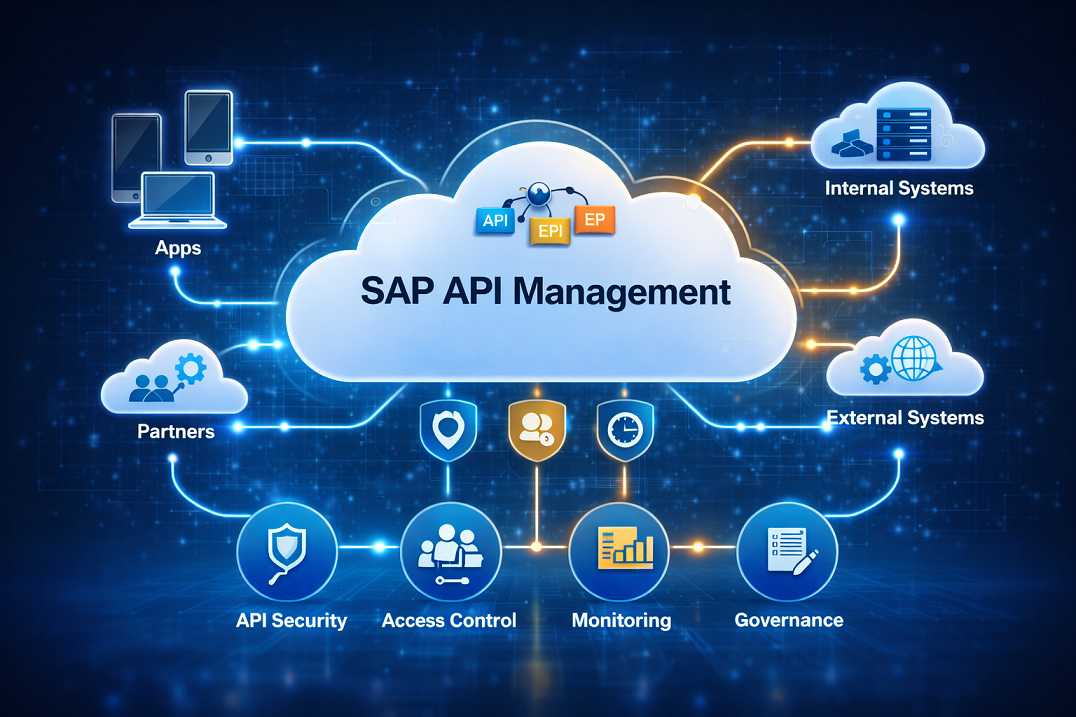
SAP API Management is an enterprise API governance and security platform on SAP Business Technology Platform (SAP BTP).
It is used to design, publish, secure, monitor, and manage APIs that expose business data and services in a controlled way.
In simple words:
👉 SAP API Management sits in front of your APIs and controls who can access them, how often, how securely, and how they are monitored.
It does not build business logic — it protects, manages, and governs APIs.
🔹 How Is SAP API Management Useful in Real-Time Projects?
In real-time projects, enterprises expose SAP data to:
- Mobile applications
- Web portals
- Partners and vendors
- External systems
- Internal applications
SAP API Management is used to secure and control this exposure.
🔸 Real-Time Project Examples
1️⃣ Mobile App Access to SAP Data
- Mobile app requests customer or order data
- SAP API Management:
- Authenticates the app
- Limits request rate
- Logs and monitors usage
- Protects backend systems
2️⃣ Partner Integration
- External vendors consume SAP APIs
- API Management:
- Issues API keys or OAuth tokens
- Applies quotas per partner
- Tracks usage per consumer
3️⃣ Public API Exposure
- APIs exposed for public or semi-public use
- API Management:
- Prevents overloading
- Blocks malicious traffic
- Enforces security policies
4️⃣ Microservices & Cloud Apps
- Multiple applications consume APIs
- API Management ensures:
- Version control
- Backward compatibility
- Smooth rollout of changes
🔹 What Is the Purpose of SAP API Management?
The core purpose of SAP API Management is to provide enterprise-level control and governance for APIs.
🔑 Key Purposes
- Centralized API security
- Controlled API access
- Traffic management
- API lifecycle governance
- Monitoring and analytics
- Protecting backend SAP systems
- Supporting digital and partner ecosystems
Without API Management:
- APIs are exposed directly
- Security risks increase
- No control on usage
- No monitoring or governance
🔹 Who Is Eligible to Learn SAP API Management?
SAP API Management can be learned by both technical and semi-technical professionals.
✅ Eligible Learners
- SAP Technical Consultants
- SAP BTP Developers
- API Developers
- Integration & Middleware Consultants
- Cloud Engineers
- Application Developers
- Digital Transformation Teams
📌 Helpful (But Not Mandatory) Skills
- Basic REST API knowledge
- HTTP methods understanding
- JSON basics
- Web application fundamentals
🔹 Who Can Implement SAP API Management?
Implementation is typically done by experienced technical roles due to security and governance responsibilities.
👨💻 Implementation Roles
- SAP BTP Consultants
- SAP API Management Consultants
- Integration Architects
- Cloud Solution Architects
- Enterprise Architects
- SAP Technical Leads
🏢 Organizations That Implement It
- Enterprises exposing SAP APIs
- Companies building mobile or web apps
- Organizations working with partners
- Businesses adopting cloud or hybrid architectures
📘 SAP API Management – Course Content
SAP API Management is a full-lifecycle API governance and security platform on SAP Business Technology Platform (SAP BTP). It is used to design, publish, secure, monitor, and manage APIs in a controlled and scalable manner for enterprise and partner ecosystems.
🔹 Module 1: Introduction to APIs
- What is an API?
- Why APIs are critical for digital enterprises
- APIs vs traditional interfaces
- RESTful APIs overview
- SOAP vs REST (high-level)
- API economy and business value
🔹 Module 2: Introduction to SAP API Management
- What is SAP API Management?
- Role of API Management in SAP landscape
- Key capabilities and benefits
- API Management architecture (conceptual)
- Enterprise API governance overview
🔹 Module 3: SAP BTP Basics for API Management
- SAP BTP account and subaccount overview
- Enabling SAP API Management service
- API Management service plans
- Roles and authorizations
- API Management cockpit overview
🔹 Module 4: API Design Fundamentals
- API-first design approach
- REST API design best practices
- Resource modeling
- HTTP methods (GET, POST, PUT, DELETE)
- Status codes and error handling
- API versioning strategies
🔹 Module 5: Creating APIs in SAP API Management
- API proxy concept
- Creating API proxies
- Importing OpenAPI (Swagger) specifications
- Defining base paths and resources
- Testing APIs using built-in tools
- API deployment lifecycle
🔹 Module 6: API Policies – Core Topic
- What are API policies?
- Traffic management policies:
- Rate limiting
- Quota
- Spike arrest
- Security policies:
- API Key validation
- OAuth 2.0
- JWT validation
- Message mediation policies
- Fault handling policies
🔹 Module 7: Security & Access Control
- API security concepts
- OAuth 2.0 fundamentals
- Client credentials flow
- Token generation and validation
- SSL/TLS and certificates
- Protecting backend services
🔹 Module 8: API Products & Developer Portal
- What is an API Product?
- Grouping APIs into products
- Publishing APIs to developers
- Developer portal overview
- Application registration
- Subscription management
🔹 Module 9: Monitoring & Analytics
- API traffic monitoring
- Performance metrics
- Error and fault analysis
- API usage analytics
- Alerts and notifications
- Operational dashboards
🔹 Module 10: API Lifecycle Management
- API versioning and backward compatibility
- Change management
- API deprecation strategies
- Retirement and cleanup
- Governance best practices
🔹 Module 11: Advanced API Management Concepts
- Request and response transformation
- Header and payload manipulation
- Caching strategies
- Cross-Origin Resource Sharing (CORS)
- API performance optimization
- High availability concepts
🔹 Module 12: Enterprise & Partner API Scenarios
- Internal enterprise APIs
- Partner and B2B APIs
- Mobile and web application APIs
- Public vs private APIs
- Monetization concepts (overview)
🔹 Module 13: Best Practices & Standards
- API naming conventions
- Documentation standards
- Security best practices
- Reusability and scalability
- Enterprise API governance model
🎯 Who Can Learn SAP API Management
- SAP BTP Developers
- SAP Technical Consultants
- API Developers
- Integration Architects
- Middleware Professionals
- Cloud & Digital Transformation Teams
(Basic REST/API knowledge is helpful but not mandatory.)
🚀 Career Opportunities
- SAP API Management Consultant
- SAP BTP API Specialist
- API Architect
- Cloud Integration Architect
- Digital Platform Engineer
🏆 Business Benefits
- Secure API exposure
- Centralized API governance
- Improved system scalability
- Faster partner onboarding
- Better monitoring and control
- Enterprise-grade security
🔚 Conclusion
SAP API Management plays a strategic role in SAP’s cloud and API-first vision. It enables organizations to expose services safely, manage API traffic, enforce security policies, and govern APIs across internal and external consumers. For professionals, it is a high-value, future-proof skill aligned with modern enterprise architecture.